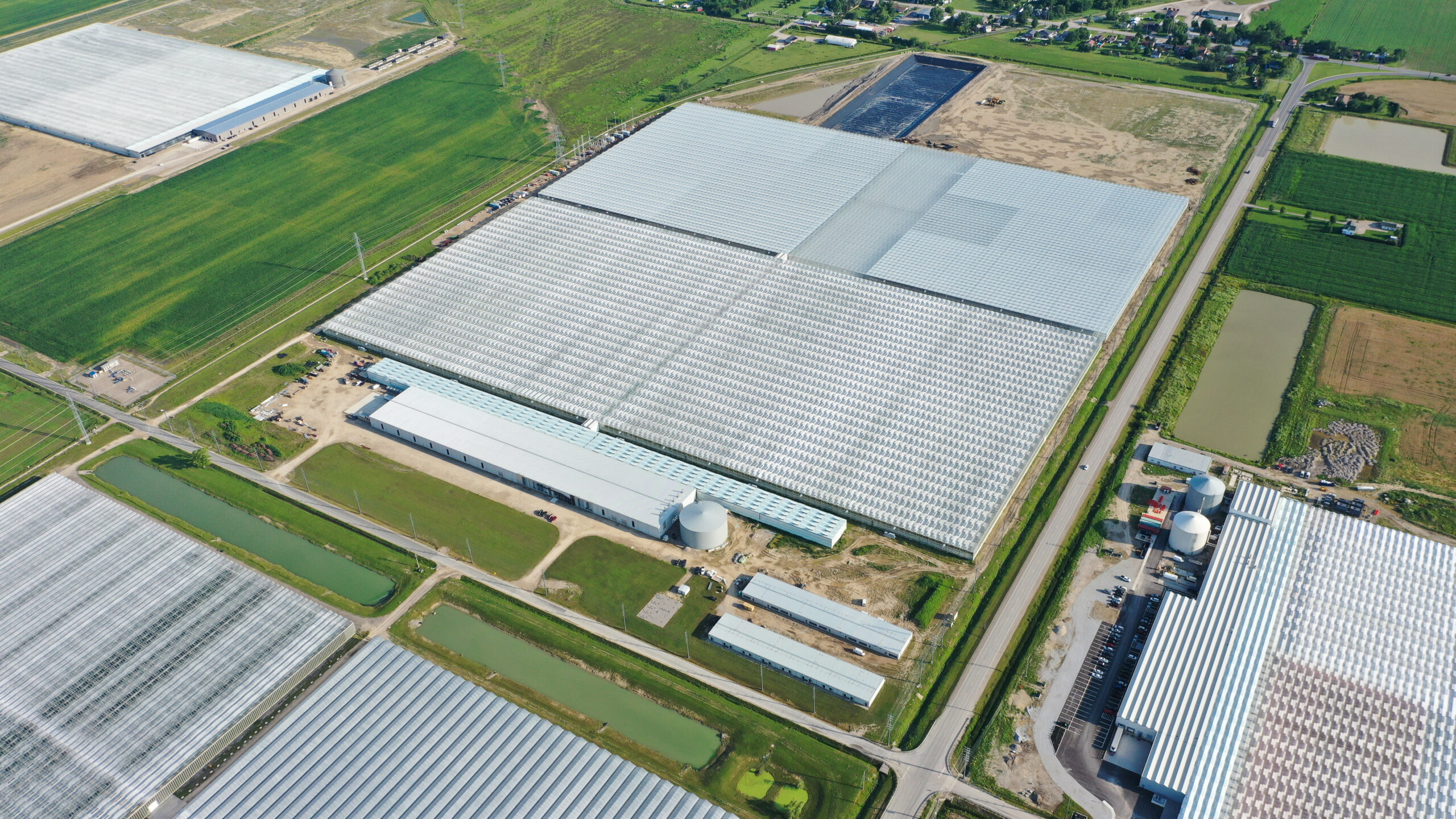
Commercial strawberry greenhouse systems can produce 8 to 15 kg of fruit per square metre each year when growers match substrate type, climate control settings, and cultivar selection to the facility’s structural capabilities. Strawberry production under glass and poly has expanded rapidly across Ontario and North America as growers seek year-round revenue streams beyond traditional tomato and pepper crops. The greenhouse structure itself plays a direct role in yield outcomes. Gutter height, ventilation capacity, energy curtain specification, and lighting infrastructure all determine whether a strawberry operation hits its production targets or falls short.
This guide covers the core production systems that drive commercial strawberry greenhouse performance: substrate options, climate parameters, cultivar strategy, and integrated pest management. Each section connects growing decisions to the structural and mechanical systems that support them.
Why Commercial Growers Are Moving Strawberries Into Greenhouses
Greenhouse strawberry production eliminates seasonal limitations, reduces pest pressure, and allows growers to supply retailers with fresh, locally grown berries during the October-to-June window when field production is unavailable. Consumer demand for year-round local strawberries has pushed grocery chains to seek domestic greenhouse suppliers, creating a significant market opportunity in Canada and the northern United States.
Market Demand and Year-Round Production Advantages
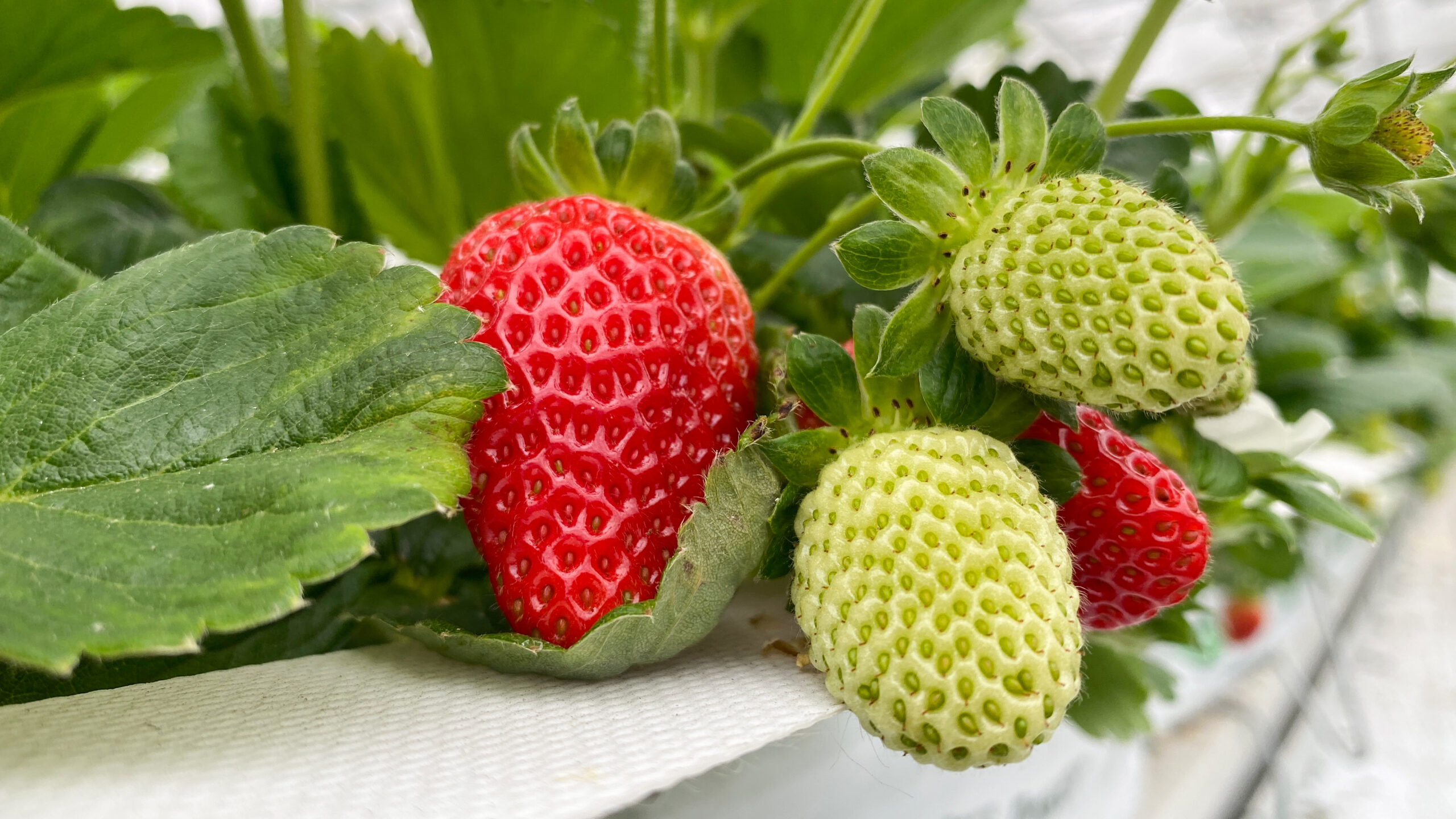
Ontario currently produces 6,000 to 7,000 tonnes of strawberries annually, representing only 14 to 16 percent of the province’s consumption. A Greenbelt Foundation report identified the opportunity to grow Ontario’s supply to 50 percent of annual consumption by combining expanded field acreage with greenhouse production during the off-season. Greenhouse-grown strawberries fill the October-to-June gap before local field berries become available, giving growers access to premium pricing during months when imported berries dominate retail shelves.
Operations like DelFrescoPure in Kingsville, Ontario, have demonstrated that year-round greenhouse strawberry production is commercially viable at scale. The company started with a one-acre trial site and expanded to 15 acres of conventional greenhouse strawberries within several years. This growth pattern reflects broader industry momentum across North America, where controlled environment agriculture (CEA) for berries has moved from experimental to commercial.
How Greenhouse Structure Affects Strawberry Performance
The greenhouse structure directly determines climate control precision, light transmission, and system integration capacity for strawberry production. Strawberries require different environmental conditions than tomatoes or peppers. They thrive in cooler temperatures, need precise humidity management to prevent fungal disease, and require access for pollinating insects. These requirements influence greenhouse design from the outset.
Two primary structure types serve commercial strawberry production. Glass greenhouses (Venlo-style) maximize light transmission and offer long structural lifespans but require higher capital investment. Gutter-connected poly greenhouses provide lower construction costs and scalability with modern covering materials that deliver strong light diffusion. Both types support hydroponic elevated gutter systems, which have become the standard growing method for commercial strawberry operations.
The choice between glass and poly affects not just initial cost but long-term energy performance. A vertically integrated greenhouse builder like South Essex Fabricating can evaluate site conditions, climate data, and production goals to recommend the structure type that delivers the best return over a 20-to-30-year facility lifespan.
Substrate Selection for Greenhouse Strawberry Production
Substrate choice controls root zone aeration, water retention, and nutrient delivery efficiency, and it directly affects fruit quality, yield consistency, and operating costs in greenhouse strawberry systems. Most commercial greenhouse strawberry operations use soilless substrates in bags or slabs placed on elevated gutters. The three dominant substrates each offer distinct advantages and trade-offs.
Coconut Coir, Perlite, and Rockwool Compared
Coconut coir (coco coir) is the most widely used substrate for commercial greenhouse strawberries in North America. It provides strong water retention, good aeration, and a neutral to slightly acidic pH range. Coir is available in compressed blocks or pre-formed slabs that fit standard elevated gutter systems. Its organic composition supports beneficial microbial activity in the root zone.
Perlite offers excellent drainage and consistent physical structure. Growers typically blend perlite with peat or coir rather than using it alone, because perlite holds little water by itself. Perlite-based substrates require more frequent fertigation cycles due to lower water-holding capacity but provide superior root zone aeration.
Rockwool slabs deliver precise moisture control and uniform physical properties. They hold approximately 80% water and 15% air at field capacity (after gravitational draining) and drain predictably. Rockwool is the dominant substrate in European greenhouse strawberry operations and works well in highly automated fertigation systems. The main drawback is disposal, as rockwool is not biodegradable.
| Substrate | Water Retention | Aeration | Reusability | Best For |
| Coconut Coir | High | Moderate | Limited | Most operations; standard gutter systems |
| Perlite Blend | Low-Moderate | High | Reusable | High-frequency fertigation setups |
| Rockwool | High | Moderate | Not reusable | Precision automated systems |
pH, EC, and Fertigation Management by Growth Stage
Strawberry plants require a substrate pH of 5.5 to 6.5 and an electrical conductivity (EC) of 1.2 to 1.8 dS/m for optimal nutrient uptake, with adjustments needed at each phenological stage. Fertigation, the process of delivering dissolved nutrients through the irrigation system, must adapt as plants transition from vegetative growth through flowering, fruit set, and harvest.
During vegetative growth, a higher nitrogen-to-potassium ratio supports leaf and crown development. At flowering and fruit set, the formula shifts toward increased potassium and calcium to promote berry size, firmness, and sugar content. Research published in the International Journal of Agricultural and Biological Engineering found that adjusting nutrient solution formulas by growth stage increased fruit yield per plant by 26% and improved the sugar-acid ratio by 41% compared to a static formula.
The greenhouse fertigation system must support this precision. Recirculating drip systems with inline EC and pH sensors allow real-time adjustment. The structural layout of the greenhouse, specifically gutter slope, drain placement, and equipment room access, determines how efficiently these systems operate.
Climate Control Parameters for Strawberry Greenhouses
Strawberry greenhouse climate control requires daytime temperatures of 16 to 24 degrees Celsius, nighttime temperatures of 10 to 13 degrees Celsius, and relative humidity between 65 and 75 percent. These ranges are cooler and more tightly managed than most greenhouse vegetable crops, which means the HVAC system, ventilation design, and energy curtain specification must account for strawberry-specific requirements.
Temperature, Humidity, and VPD Targets
The day-to-night temperature differential triggers flowering and fruit development in strawberry plants. Maintaining 16 to 24 degrees Celsius during the day and dropping to 10 to 13 degrees Celsius at night requires a heating system that responds quickly and a ventilation system that prevents overheating during sunny periods.
Vapor pressure deficit (VPD) is the measurement that connects temperature and humidity into a single metric for plant transpiration management. At the recommended daytime temperature and humidity ranges for strawberries (16 to 24 degrees Celsius, 65 to 75% relative humidity), VPD typically falls between 0.5 and 0.9 kPa. A VPD below 0.4 kPa signals excessively humid conditions that promote Botrytis cinerea (grey mould), the most significant fungal threat to greenhouse strawberries. A VPD above 1.0 kPa causes water stress that leads to misshapen fruit and reduced yields.
Nighttime relative humidity must stay below 85% to prevent condensation on fruit surfaces. Energy curtains play a critical role here. A properly specified thermal screen reduces radiant heat loss at night while preventing the temperature inversions that cause moisture to collect on berries and leaves.
Supplemental Lighting and Daily Light Integral Requirements
Strawberry plants require a daily light integral (DLI) of 14 to 26 mol/m²/day for consistent flowering and fruit production. In northern latitudes like Ontario, natural DLI drops below this threshold from October through March, making supplemental lighting essential for year-round production.
USDA SARE-funded research evaluated three DLI regimes (14, 20, and 26 mol/m²/day) for greenhouse strawberry cv. Albion and found that higher light integrals increased both fruit count and total yield. LED fixtures have become the standard for supplemental strawberry lighting due to their spectral tunability and lower heat output compared to high-pressure sodium (HPS) lamps. The greenhouse roof structure must accommodate lighting infrastructure without creating shadows on the growing plane.
CO2 Enrichment and Ventilation Strategy
Supplemental CO2 at 800 to 1,200 ppm can increase strawberry yields by 10 to 20 percent compared to ambient levels (approximately 425 ppm). CO2 enrichment is most effective during periods when the greenhouse is closed for heating, typically from late fall through early spring in northern climates. Yield response varies by cultivar, light level, and enrichment concentration, so growers should monitor production data and adjust targets for their specific operation.
The ventilation system must balance CO2 retention with humidity removal. Ridge vents, side vents, and horizontal air flow (HAF) fans work together to distribute enriched air evenly across the growing area while preventing humidity pockets that encourage fungal disease. The greenhouse structural engineer must size vent openings and fan capacity for the specific building dimensions and local wind exposure.
Yield Benchmarks and Cultivar Selection
Well-managed commercial strawberry greenhouses produce 8 to 15 kg per square metre annually, with cultivar selection and plant density as the two largest variables affecting output within a properly designed facility.
Day-Neutral vs. Everbearing Varieties for CEA
Day-neutral strawberry cultivars produce fruit regardless of photoperiod length, making them the standard choice for year-round greenhouse production. Albion, Monterey, and San Andreas are widely used day-neutral varieties in North American CEA operations. These cultivars flower and fruit continuously when temperatures stay within the 16 to 24 degree Celsius range.
Everbearing cultivars such as Hademar and Lady Emma produce multiple crops per season and can yield 12 to 15 kg/m² annually in well-controlled environments. They are less sensitive to day length but require consistent nutrient and humidity management to sustain fruit quality across harvests. Canadian operations have also begun trialling Japanese cultivars selected specifically for flavour and indoor growing characteristics.
Expected Yield per Square Metre in Controlled Environments
Yield per square metre depends on plant density, growing system, and facility performance. Elevated gutter systems with single-row spacing typically support 12 to 16 plants per square metre. Lift gutter systems, which allow growers to adjust gutter height throughout the crop cycle, can increase effective plant density by improving light interception across the canopy.
Research on pyramidal hydroponic systems achieved 23.5 kg/m² in the upper stratum at densities of 43 plants/m², though this setup is not standard for large-scale commercial operations. For a production-oriented greenhouse in Ontario, a realistic target is 10 to 15 kg/m² annually with day-neutral cultivars on elevated gutters, assuming proper climate control and supplemental lighting are in place.
Pollination and Integrated Pest Management in Enclosed Systems
Enclosed greenhouse environments require managed pollination with bumble bees and proactive integrated pest management (IPM) to maintain fruit set and prevent crop loss from Botrytis and powdery mildew.
Bumble Bee Deployment and Flower Access
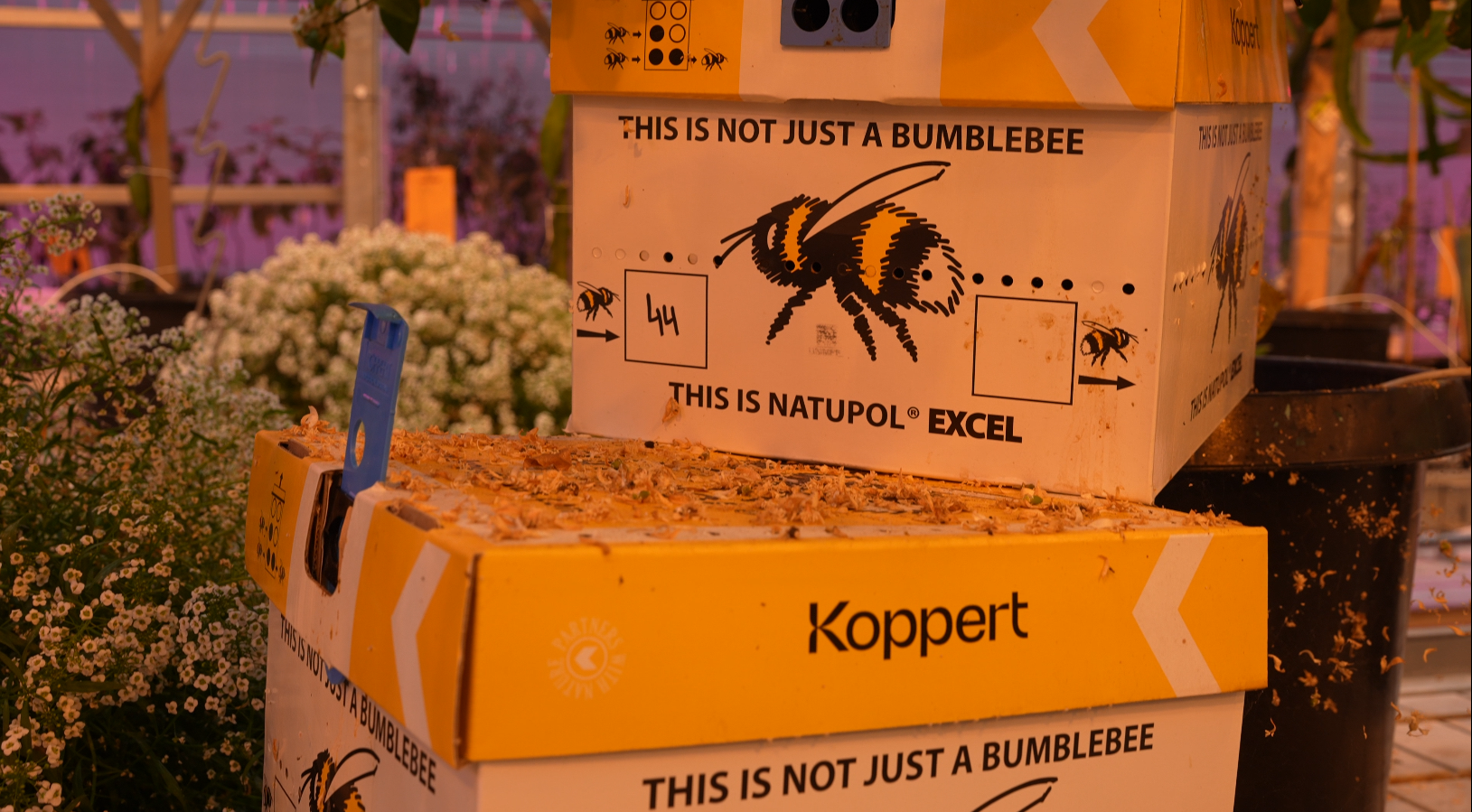
Strawberry flowers require insect pollination for proper fruit development. Incomplete pollination produces small, misshapen berries with poor market value. Commercial greenhouse operations in North America use Bombus impatiens (common eastern bumble bee) colonies placed throughout the growing area. Stocking density depends on flower volume and greenhouse configuration, with suppliers typically recommending one hive per 1,000 to 5,000 square metres for berry crops.
The greenhouse layout must allow bees unrestricted flight access across all gutter rows. Air circulation fans should not create wind speeds that prevent bee foraging. Pesticide applications, when necessary, must use bee-safe formulations and follow night-application protocols to avoid colony damage.
Botrytis and Powdery Mildew Prevention Through Climate Design
Botrytis cinerea (grey mould) is the primary disease threat in greenhouse strawberry production. It thrives when relative humidity exceeds 85% and air movement is insufficient. The most effective prevention strategy is climate design: a greenhouse with adequate ventilation capacity, properly sized dehumidification, and energy curtains that prevent nighttime condensation will dramatically reduce Botrytis pressure compared to a facility that relies solely on chemical fungicides.
Powdery mildew (Podosphaera aphanis) spreads in moderate temperatures with fluctuating humidity. Maintaining stable VPD within the 0.5 to 0.9 kPa range through automated climate controls reduces conditions favourable to both diseases. An IPM programme combining biological controls (predatory mites, beneficial fungi) with climate management minimizes chemical inputs and keeps production aligned with food safety requirements.
Planning Your Strawberry Greenhouse Project
A strawberry greenhouse project requires structural and systems specifications that differ from a standard vegetable greenhouse, and identifying these requirements early prevents costly redesigns after construction begins.
Key Structural and Systems Specifications to Discuss With Your Builder
Before committing to a greenhouse design for strawberry production, growers should confirm the following specifications with their construction partner: gutter height sufficient for elevated growing systems and worker ergonomics, ventilation capacity rated for the humidity loads of a berry crop (not just temperature control), energy curtain specifications that address nighttime condensation prevention, lighting infrastructure mounting capacity in the roof structure, and fertigation room sizing for recirculating nutrient systems with inline monitoring.
South Essex Fabricating has designed and built commercial greenhouse facilities across North America for over 30 years. With a 208,000 square foot manufacturing facility in Leamington, Ontario, and a vertically integrated model that covers design, steel fabrication, and project management under one roof, SEF works with growers to engineer facilities around specific crop requirements. If you are evaluating a greenhouse project for strawberry production, contact the SEF team to discuss your site conditions, production goals, and structural options.
Frequently Asked Questions
What temperature do strawberries need in a commercial greenhouse?
Strawberries perform best at daytime temperatures of 16 to 24 degrees Celsius and nighttime temperatures of 10 to 13 degrees Celsius. This day-night differential triggers proper flowering and fruit development. Temperatures above 28 degrees Celsius reduce fruit set and berry size.
What is the best substrate for greenhouse strawberries?
Coconut coir is the most common substrate for commercial greenhouse strawberry production in North America. It provides strong water retention, good aeration, and supports beneficial root zone microbes. Perlite blends and rockwool are also effective, depending on the fertigation system design.
How many strawberries can you grow per square metre in a greenhouse?
Commercial greenhouse strawberry operations typically produce 8 to 15 kg per square metre annually. Plant density ranges from 12 to 16 plants per square metre on elevated gutter systems. Yield depends on cultivar, supplemental lighting, and climate control precision.
Do greenhouse strawberries need pollination?
Yes. Greenhouse strawberries require managed pollination, typically using Bombus impatiens (common eastern bumble bee) colonies. Stocking rates vary by flower density and greenhouse size. Without adequate pollination, strawberry fruit develops unevenly and loses market value.
Can you grow strawberries year-round in a greenhouse in Ontario?
Yes. With supplemental LED lighting, heating, and CO2 enrichment, commercial greenhouses in Ontario produce strawberries from October through June and beyond. Day-neutral cultivars like Albion fruit continuously when climate conditions remain within the target range.