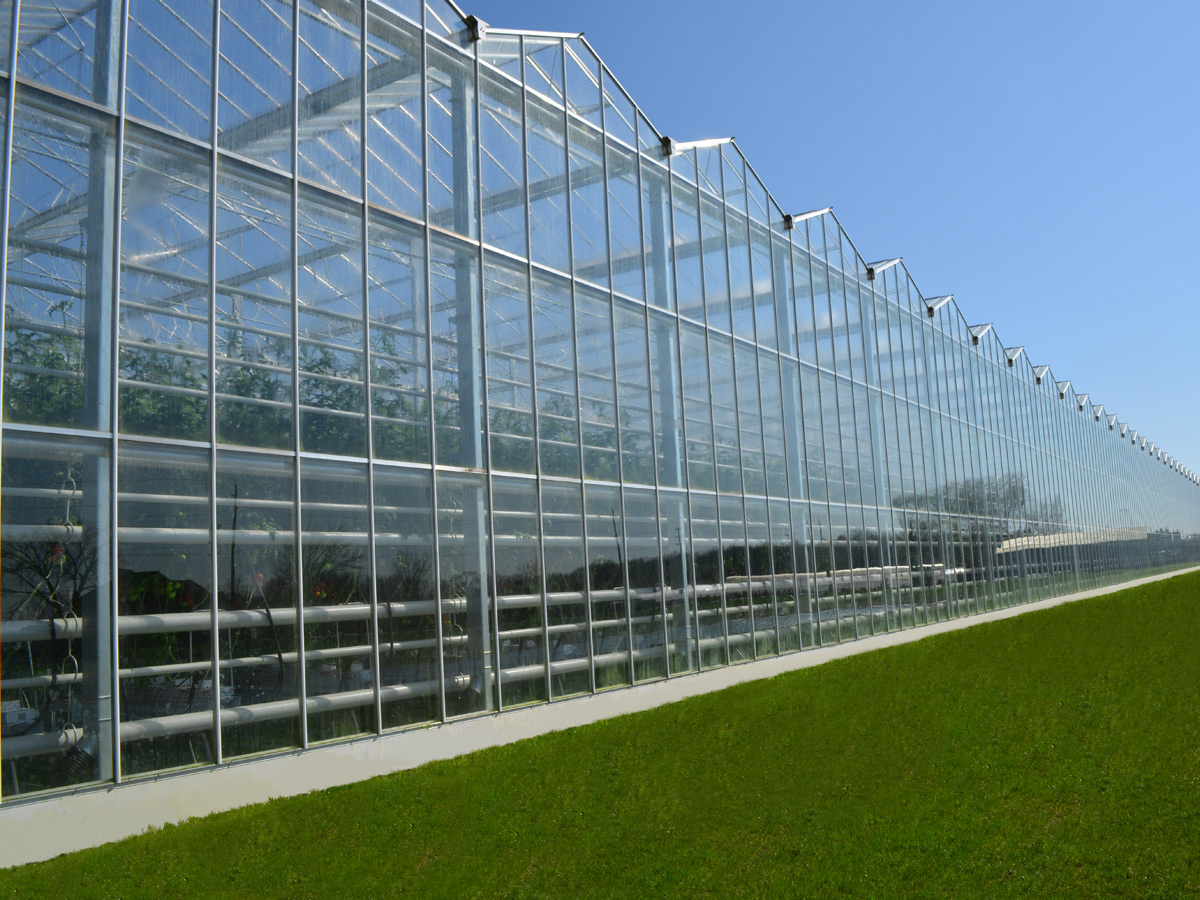
A Venlo glass greenhouse gives Canadian growers high light transmission and precise climate control for tomatoes, cucumbers, peppers, and strawberries. South Essex Fabricating (SEF) designs, fabricates, and installs each Venlo greenhouse for Canadian snow loads, low winter sun, and year-round commercial production.
South Essex Fabricating is a commercial greenhouse builder in Leamington, Ontario, building Venlo greenhouses, poly greenhouses, and complete growing systems for vegetable and berry farms across North America. The company fabricates its steel in-house at a 208,000 square foot facility and has completed more than 350 projects over 30+ years.
The design takes its name from Venlo, a Dutch city near 51 degrees north, and growers worldwide use it for large-scale commercial operations. Leamington sits near 42 degrees north, with a higher winter sun angle but heavier snow.
What Is a Venlo Greenhouse and How Does It Work?
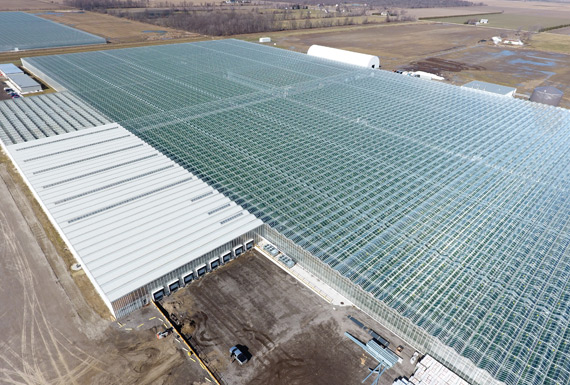
A Venlo greenhouse is a multi-span greenhouse with several small, peaked roofs on each steel truss. Narrow aluminum glazing bars hold large glass panels, and hinged vents open at the ridges. The design admits maximum light and uses less roof area than one wide-span structure.
Each small roof, called a span, typically measures 3.2 to 4.8 metres wide. Trusses join at shared gutters that control water flow and can send rainwater to an irrigation pond. University of Arkansas course material notes that this layout reduces surface area and heat loss.
SEF pairs each Venlo frame with a glass roof system of single or double-glazed, high-quality glass. See options on the Venlo greenhouse construction page.
Which Crops Grow Best in a Venlo Glass Greenhouse?
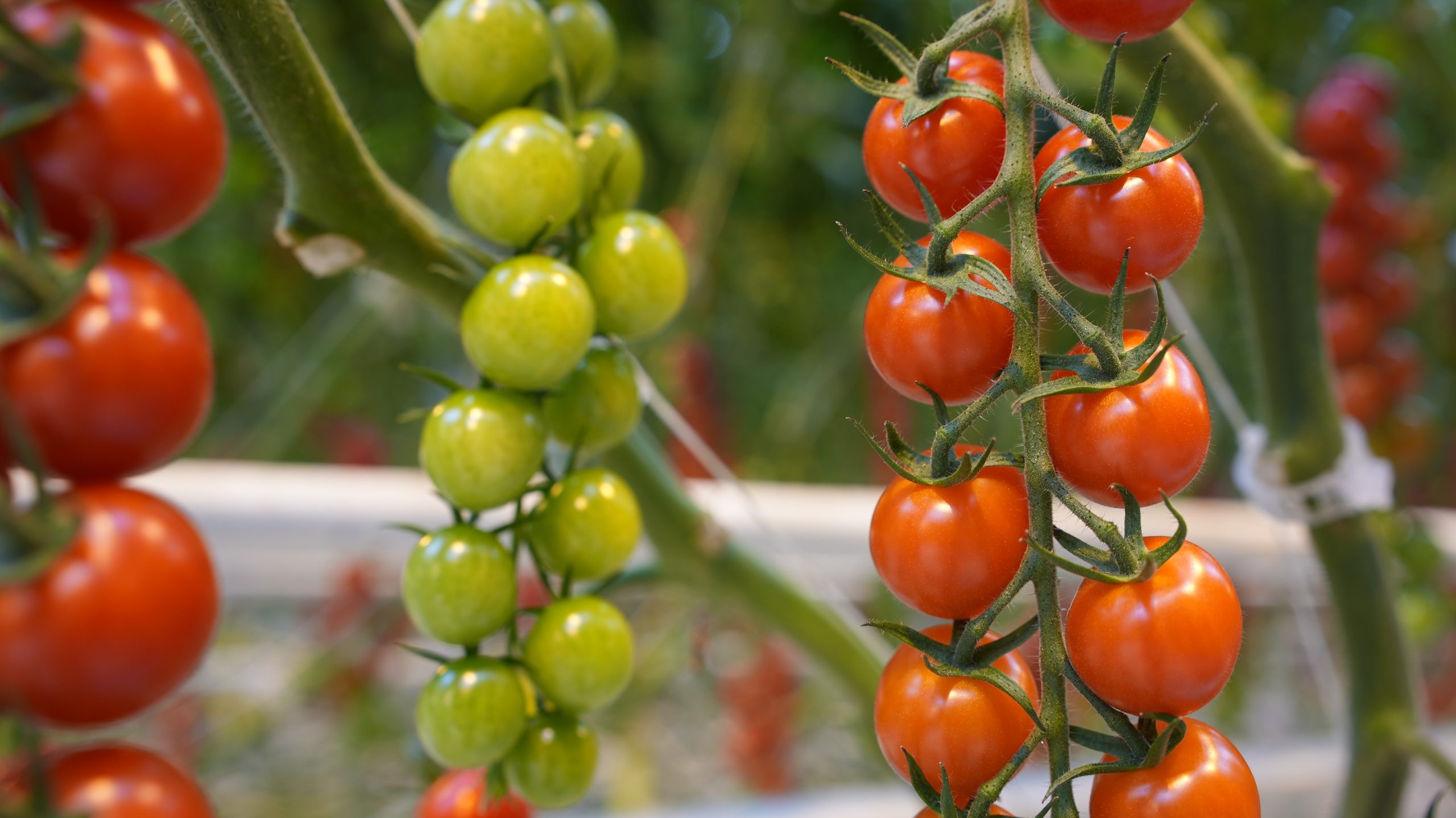
Tomatoes, cucumbers, and peppers grow best in a Venlo greenhouse because these tall vine plants need high light, tall growing space, and stable temperatures. Strawberries, lettuce, and specialty crops such as cannabis also perform well when operators add supplemental lighting and humidity management.
Statistics Canada reported 334.7 million kilograms of greenhouse tomatoes and 384.1 million kilograms of cucumbers in 2025, with Ontario holding 64.9% of national greenhouse area. Vegetable ranges typically use hydroponic systems on substrate, where controlled growing conditions drive crop production.
| Plant | Why a Venlo Greenhouse Fits | Key Design Priority |
|---|---|---|
| Tomatoes | High light demand and tall high-wire vines | Gutter height, energy screens, heating |
| Cucumbers | Fast growth that responds to light and airflow | Ventilation systems and moisture control |
| Peppers | Long cycle that rewards steady conditions | Even light and winter heat retention |
| Strawberries | Winter fruit needs light and dry leaves | Supplemental lighting and Botrytis prevention |
| Lettuce | Short cycles on automated hydroponic lines | Uniform light and automation layout |
SEF sets height, vent area, and irrigation systems around the plants before steel design begins. See our guides to commercial strawberry greenhouse systems and the automated lettuce greenhouse.
How Does Glass Affect Light, Plant Growth, and Output?
More light means more photosynthesis and more fruit. Wageningen research found that each 1% increase in light raises fruit vegetable yield by 0.7 to 1%. The effect grows stronger in low-light winter months, which makes glazing transparency a vital design factor in Canada.
Light transmission is the share of outside sunlight that reaches the plants. The rule comes from a 2006 study by Leo Marcelis and colleagues covering tomato, cucumber, and sweet pepper. Light matters most at low light levels and high CO2 concentrations, and an Ontario winter combines both.
In practice, if heavier framing or dirty panes block 5% more light, a tomato range can lose 3.5 to 5% of its winter output, every year the building operates.
Daily light integral (DLI) measures the total light plants receive in one day. Michigan State University horticulturist Erik Runkle recommends a DLI of at least 15, and preferably more than 20, moles per square metre for vine plants. Northern operators need high-intensity lighting systems for at least six months a year to reach it. Clean, clear glazing cuts lamp hours and energy use.
Clear vs. Diffuse Glass
Clear panes pass direct light in straight beams, while diffuse panes scatter light across the canopy. Dutch research found that diffuse glass with equal transmission raised tomato yield by 8 to 11% over standard panes. Scattered light reaches deeper into each plant, where lower leaves can use it.
Haze factor is the share of transmitted light that a pane scatters. A tomato trial led by Tom Dueck at Wageningen tested haze factors of 45%, 62%, and 71%. Gains came mainly from heavier fruit, and plants showed less Botrytis late in the season. Earlier Dutch trials reported 6 to 9% higher cucumber yields under diffuse panes. These options add cost, so SEF weighs payback before it specifies the glazing.
How Does a Venlo Greenhouse Perform in Canadian Weather?
A Venlo greenhouse performs in Canadian weather when its frame carries local snow and wind loads, its height buffers temperature swings, and its vents and energy screens control heat and moisture. These systems decide whether light gains turn into steady winter production.
Snow and wind loads. Canadian building codes set snow, wind, and seismic loads by location, and every Venlo greenhouse must withstand them without deflection that cracks panes. SEF engineers and fabricates the structural steel systems in-house so every component matches the drawings.
Height. Taller houses hold more air, so inside temperature changes more slowly. In Greenhouse Management, John Bartok explained that raising gutters from 12 to 16 feet adds more than 20% air volume, at the cost of more wall glazing and heat loss.
Ventilation. Venlo roofs use alternating or continuous ridge vents. Warm, humid air exits through the top while cool air enters at plant level, which lowers the humidity that drives fungal disease. SEF sizes ventilation systems to each range’s moisture load.
Energy screens. A single pane offers little insulation. Bartok reported that one energy screen can save up to 40% of winter heat, and a second adds 10 to 15%. Statistics Canada reported 2025 greenhouse electricity costs of $181.9 million, up 21.2%. SEF installs energy curtains, and operators automate environmental control through one climate control system.
Venlo Greenhouse vs. Plastic and Polycarbonate Greenhouses
A Venlo greenhouse provides the highest long-term light transmission and the longest roof life, so it suits high-value crops grown year-round. Plastic greenhouses and polycarbonate houses cost less to build but give up light or durability.
| Type | Light | Roof Life | Best Application |
|---|---|---|---|
| Venlo greenhouse | Highest, stable over time | Decades with maintenance | Year-round vegetables and berries |
| Poly film house | Lower with two film layers | Film replaced periodically due to UV | Lower-cost and seasonal production |
| Polycarbonate house | Lower than glass | Panels age under sunlight | Sites that need extra insulation |
Compare a gutter-connected poly greenhouse or grow tunnel system for seasonal setups with a durable Venlo greenhouse.
What Drives the Cost of a Venlo Greenhouse in Canada?
Venlo greenhouse cost in Canada depends on scale, pane type, height, site work, and the systems inside. Heating, energy screens, irrigation, lighting, and automation add major cost on top of steel and glazing, so compare complete quotes rather than structure prices.
Grading, drainage, and foundations vary by property. Efficient climate systems cost more upfront but improve energy efficiency for decades. This long-term agricultural investment is often financed through Farm Credit Canada. SEF prices each project as one fixed-cost scope, which protects the investment from surprise change orders.
How to Build a Venlo Greenhouse in Canada
Start with crop and light targets, then confirm permits and utilities, complete the design, fabricate the steel, install the panes, and commission the systems. Each step locks in light and energy performance for the decades the facility will operate.
- Set crop and light targets. Define the plant type, production goal, and December light need.
- Confirm permits, site, and utilities. Check zoning, water drainage, and electrical service. See our guide to commercial greenhouse permit requirements in Ontario.
- Complete the greenhouse design. Rutgers engineering research recommends north-south orientation for multi-bay ranges, so shadows move across the plants.
- Fabricate and erect the structure. Steel goes up after the fall harvest, and installing the glass follows the trusses.
- Commission the systems. Test heating, vents, irrigation, screens, and automation before the spring crop.
South Essex Fabricating delivers each Venlo greenhouse as a turnkey solution under one contract. This model typically shortens timelines by 25 to 30 percent, a company-reported figure, and supports future scalability. Learn why in-house greenhouse fabrication matters, or read our expansion planning guide.
Frequently Asked Questions
How do you choose a Venlo greenhouse builder in Canada?
Choose a builder that fabricates its own steel, engineers for Canadian snow loads, and can show completed projects and grower references. Ask who manages installation, who supports the facility after handover, and whether one contract covers the structure, glazing, and systems.
How long does Venlo greenhouse construction take in Ontario?
Most projects in this region run 12 to 24 months from concept to first harvest, including design, permits, and construction. Steel erection usually starts after the fall harvest so glazing and commissioning finish before a spring crop.
Can you grow tomatoes year-round in a Venlo greenhouse in Canada?
Yes. Ontario producers grow greenhouse tomatoes year-round by pairing Venlo glazing with supplemental lighting, energy screens, heating, and CO2 enrichment. Lighting fills the winter gap, since vine plants need a daily light integral of at least 15 moles per square metre.
How long does a Venlo greenhouse last, and what maintenance does it need?
A well-built Venlo greenhouse serves for decades. Maintenance centres on clean panes, sound seals, and working vents. Dust and residue cut transmission, and every percent of lost light can cost up to 1% of fruit output, so many operators run automated roof washers.
Build a Venlo Glass Greenhouse for Canadian Conditions
A Venlo glass greenhouse rewards Canadian growers who plan light, plants, and climate together. The panes deliver the light, the steel carries the snow, and the vents and screens hold conditions steady. When one team controls all three, the facility performs as designed.
South Essex Fabricating has built across North America for more than 30 years from its 208,000 square foot facility in Leamington, Ontario, helping farms build sustainable food systems for modern agriculture. Review our completed projects or contact the SEF team. Call 519-322-5995 or email info@southsx.com.